Prevent Surprise Azure Bills with Budgets, Alerts, Tags, and Cleanup
Azure cost safety is a process: estimate, constrain access, create budgets and alerts, tag ownership, observe actual and forecasted cost, stop waste, and delete complete lab environments. A budget is an early-warning system. It does not normally block deployment or shut resources down when its amount is reached.
Time: 20–30 minutes · Cost: budgets have no separate charge · Prerequisite: Cost Management permission at the selected scope.
What can create an unexpected bill?
Common causes include oversized VMs, managed disks left after VM deletion, public IPs, NAT gateways, firewalls, databases with provisioned capacity, Kubernetes worker nodes, log ingestion and retention, backup vault data, model tokens, search replicas, outbound transfer, and Marketplace plans.
The cost of an architecture is the sum of its resources and traffic, not the price of the service named in the tutorial title.
How do you create an Azure budget?
Ways to build
Choose the Azure tool you want to use. The underlying resource stays the same.
Azure portal
- Search for Cost Management + Billing.
- Open Cost Management → Budgets at the intended subscription or resource-group scope.
- Select Add or Create.
- Give the budget a clear name such as monthly-learning-limit.
- Choose a reset period and realistic amount.
- Add actual and forecast alert thresholds, such as 50%, 80%, and 100%.
- Send alerts to an address or action group that is actively monitored.
- Create the budget and verify it appears at the correct scope.
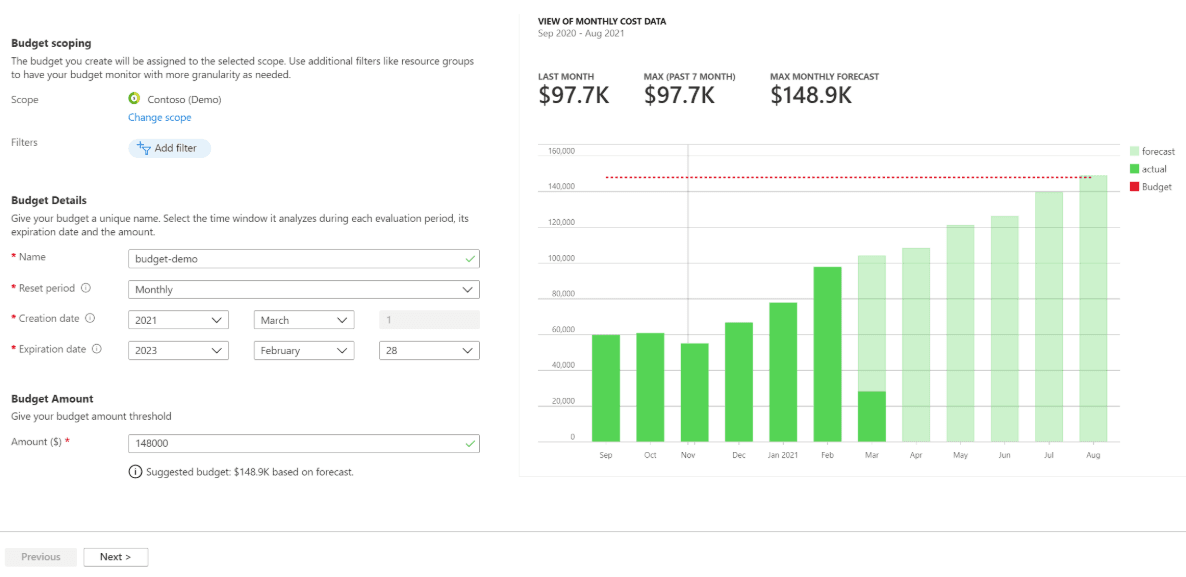
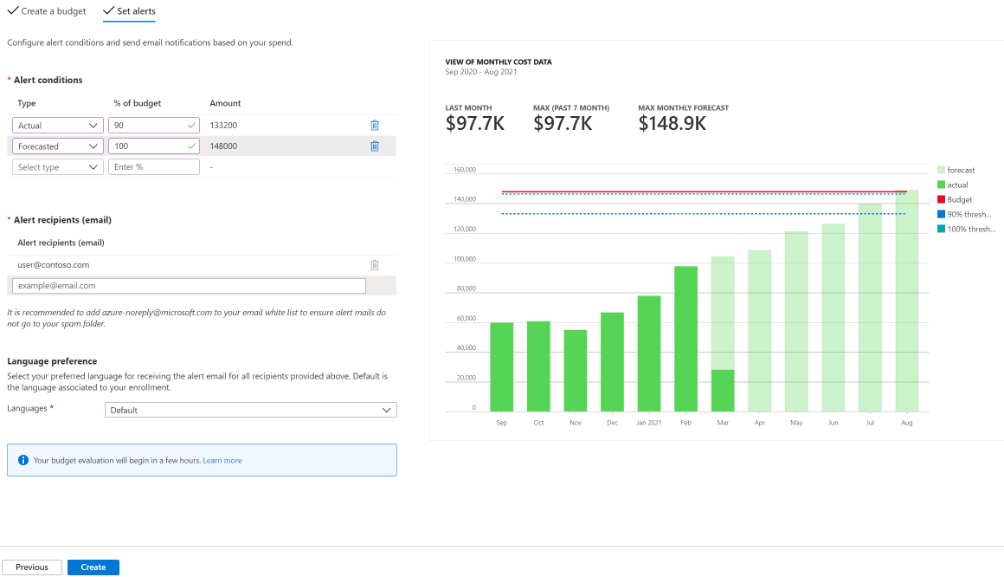
Validate the current API version in Microsoft Learn before production use. Billing scopes and offer types can affect available operations.
Cost data is not instant. Alerts can arrive after usage has already occurred. A tiny budget does not turn Azure into a hard-capped sandbox. Azure CLI budget command coverage changes over time; inspect az consumption budget --help and use the documented REST operation when a direct command is unavailable.
How do you inspect current cost?
Portal: Cost Management → Cost analysis. Set scope, date range, granularity, and grouping. Useful groupings include resource, service name, resource group, location, meter, and tag.
CLI cost queries are available through Cost Management APIs and extensions, but portal Cost Analysis is often the fastest first inspection. For inventory:
bash
PowerShell:
powershell
Inventory is not cost. It helps you find likely resources, while Cost Analysis shows billed meters.
Which tags should a learning environment use?
Start with:
Tags do not automatically inherit from a resource group to resources unless policy adds or modifies them. Tags are also not a security boundary.
How do you clean up a whole lab?
If the lab is isolated in one resource group, deletion is the safest simple cleanup:
bash
PowerShell:
powershell
Then verify later:
bash
Check for resources created outside the group: role assignments, Entra applications, DNS delegations, Marketplace subscriptions, recovery vault dependencies, locks, and diagnostic destinations.
What are the five cost gates before production?
- A pricing-calculator estimate with assumptions.
- A small load test measuring real meters.
- Budgets and forecast alerts at useful scopes.
- Ownership, expiry, and workload tags enforced by policy.
- A monthly FinOps review of unit cost, idle capacity, reservations, and anomalies.
Common mistakes
- Believing a budget prevents all further charges.
- Stopping a VM but leaving chargeable disks and networking.
- Deleting the app while retaining high-volume logs and backups.
- Setting alerts to an unmonitored address.
- Ignoring forecast alerts because actual cost is below the budget today.